Rich Gasaway

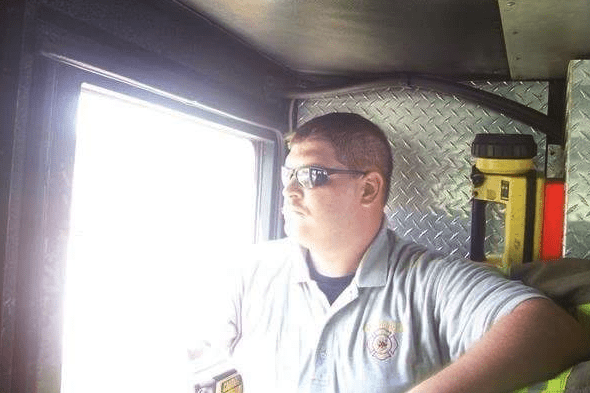
Richard B. Gasaway served 33 years on the front lines as a firefighter, EMT-Paramedic and fire chief. He earned his Doctor of Philosophy degree while studying how individuals, teams and organizations develop and maintain situational awareness and make decisions in high stress, high consequence, time compressed environments. Dr. Gasaway is widely considered to be one of the nation's leading authorities on first responder situational awareness and decision making. His material has been featured and referenced in more than 400 book chapters, research projects, journal articles, podcasts, webinars and videos. His research and passion to improve workplace safety through improved situational awareness is unrivaled. Dr. Gasaway's leadership and safety programs have been presented to more than 42,000 first responders, emergency managers, medical providers, military personnel, aviation employees, industrial workers and business leaders throughout North America, Europe, Asia and Australia.

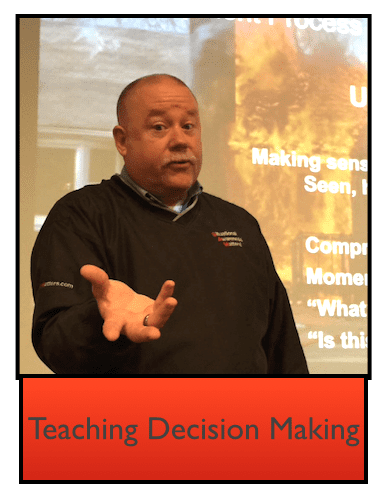
Episode 68: Teaching Decision Making

  During the Mental Management of Emergencies program we talk about the process of how to develop and maintain situational awareness. And then, we talk about how to use situational awareness as the foundation for decision making.     Length: 32 minutes click the YouTube icon to listen     _____________________________________________________ If you are interested in

Episode 68: Teaching Decision Making Read More »
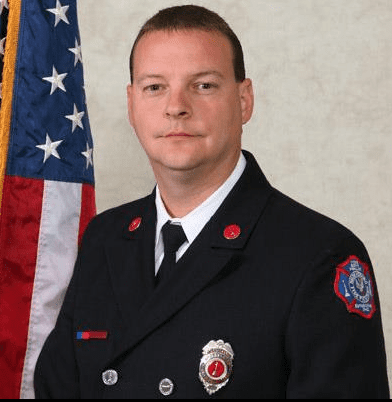
Episode 67: Lieutenant Todd Budd Close Call Survivor Story

Lieutenant Todd Budd, at the time of his close call event was serving as the acting officer on Brownsburg ladder company 131. They were dispatched to assist a neighboring community for a working building fire. The call came in after midnight and their on-duty crew of four responded along with a battalion chief. Length: 72

Episode 67: Lieutenant Todd Budd Close Call Survivor Story Read More »

Unexpected information can be a barrier to situational awareness

One of the foundations of situational awareness development is being able to make accurate predictions of future events. Making (accurate) predictions is a fairly complex neurological process that relies heavily on gathering information, comprehending the meaning of the information, tapping into your stored knowledge of past experiences, trusting your intuition and using your imagination to

Unexpected information can be a barrier to situational awareness Read More »

Episode 65: Conducting the 360 size-up

    Situational awareness starts with capturing clues and cues in your environment (perception) and then understanding what those clues and cues mean (comprehension). At a structure fire, the process of capturing information should involve a complete 360-degree size-up of the scene. Many departments have policies that stipulate the completion of a 360-degree size up. Yet,

Episode 65: Conducting the 360 size-up Read More »

Episode 64: Interview with Close Call Survivor Nick Miller

    On Christmas Day in 2010 the Valley Fire & Rescue Department responded to a residential dwelling fire that resulted in two close call survivor events. Length: 55 minutes click the YouTube icon to listen     _____________________________________________________ If you are interested in taking your understanding of situational awareness and high-risk decision making to a higher

Episode 64: Interview with Close Call Survivor Nick Miller Read More »

Episode 63: SA Q &A Session

    During SAMatters Tour events there are lots of discussion happening among attendees and some great questions being asked. This episode addresses some of the questions fielded during live events. Length: 27 minutes click the YouTube icon to listen     _____________________________________________________ If you are interested in taking your understanding of situational awareness and high-risk decision

Episode 63: SA Q &A Session Read More »

Unpredictable staffing: A barrier to situational awareness

The process of developing situational awareness starts with capturing information using the five senses. Then, the information must be understood. And finally, once the information is understood, a prediction is made about future outcomes. This process can be challenged when staffing is unpredictable.

Unpredictable staffing: A barrier to situational awareness Read More »

Episode 62: Review of the most popular close call interviews

    What can you learn from someone who has survived a close call? The answer is… A LOT. When I launched this show in April 2014, the purpose was, as it remains, to help first responders improve situational awareness and decision making while operating in high stress, high consequence environments. This mission has been supplemented

Episode 62: Review of the most popular close call interviews Read More »